
How Copilot usage is charged
Problem
Section titled “Problem”You cannot reduce what you do not understand. Two billing models exist today, and they reward different habits.
What changed
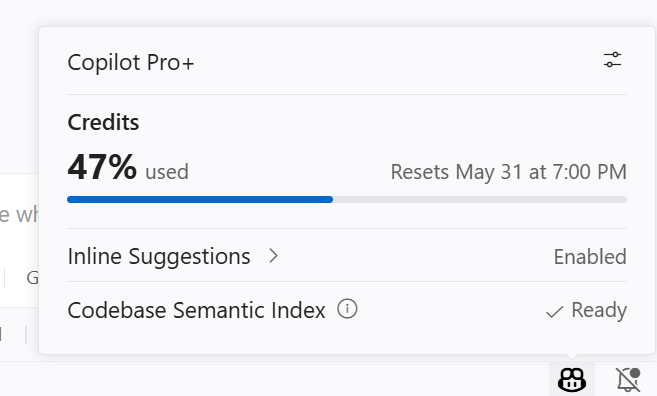
Section titled “What changed”- Usage-based billing (current). GitHub announced that from June 1, 2026, Copilot usage consumes GitHub AI Credits. Credits are consumed at different rates depending on the model and the number of tokens processed. Each plan includes a monthly allowance.
- Legacy premium-request billing. Some Pro / Pro+ subscribers on an existing annual plan stayed on request-based billing. There, each prompt in chat counts as one premium request multiplied by the model’s rate, and autonomous tool calls inside an agent run do not count separately.
| Usage-based (AI credits) | Legacy (premium requests) | |
|---|---|---|
| Unit | Tokens × model rate | Prompts × model multiplier |
| Long chat history | Costs more (re-sent as input) | Not billed per token |
| Large tool catalog / instructions | Costs more (sent every request) | Not billed per token |
| Strongest lever | Smaller context, right model | Fewer prompts, lower-multiplier model |
Check which plan you are on in your GitHub Copilot billing settings before choosing tactics.
Why tokens matter for every request
Section titled “Why tokens matter for every request”Each request sends input tokens (system prompt, instructions, tool definitions, the whole conversation so far, attachments, tool results) and receives output tokens (including any reasoning). Input grows with every turn, so a long session pays for old context again and again. Providers can reuse an unchanged request prefix (prompt caching), which lowers cost and latency when the beginning of the request stays stable.
Cached input and billing
Section titled “Cached input and billing”When a prefix cache hits, cached_input_tokens are charged at the model’s discounted cache-read rate under AI Credits, rather than the uncached input rate. Under legacy premium-request billing, the prompt still consumes 1 × model multiplier premium requests regardless of a cache hit; caching can still reduce latency and rate-limit pressure. Check the model picker hover for the applicable rates and Agent Debug Logs for the request’s cache usage; verify billing details in your plan’s usage report.
Trade-offs
Section titled “Trade-offs”Everything in this track trades context against cost. Removing context the model needs leads to retries and rework, which can cost more than it saves.