
Copilot Tokenomics (Token Economics)
Track A covers Copilot Tokenomics (token economics) for developers who use GitHub Copilot in VS Code. Every page follows the same shape: Problem → Action → How to verify → Trade-offs.
Check your Copilot billing settings first; the best levers depend on your plan.
| Billing model | What is charged | Start with |
|---|---|---|
| AI Credits (usage-based) | Input, cached input, and output tokens × their model rates | Measure usage, context, and tools |
| Legacy Premium Requests | Each prompt/turn × the model multiplier | Billing, models, and budget guards |
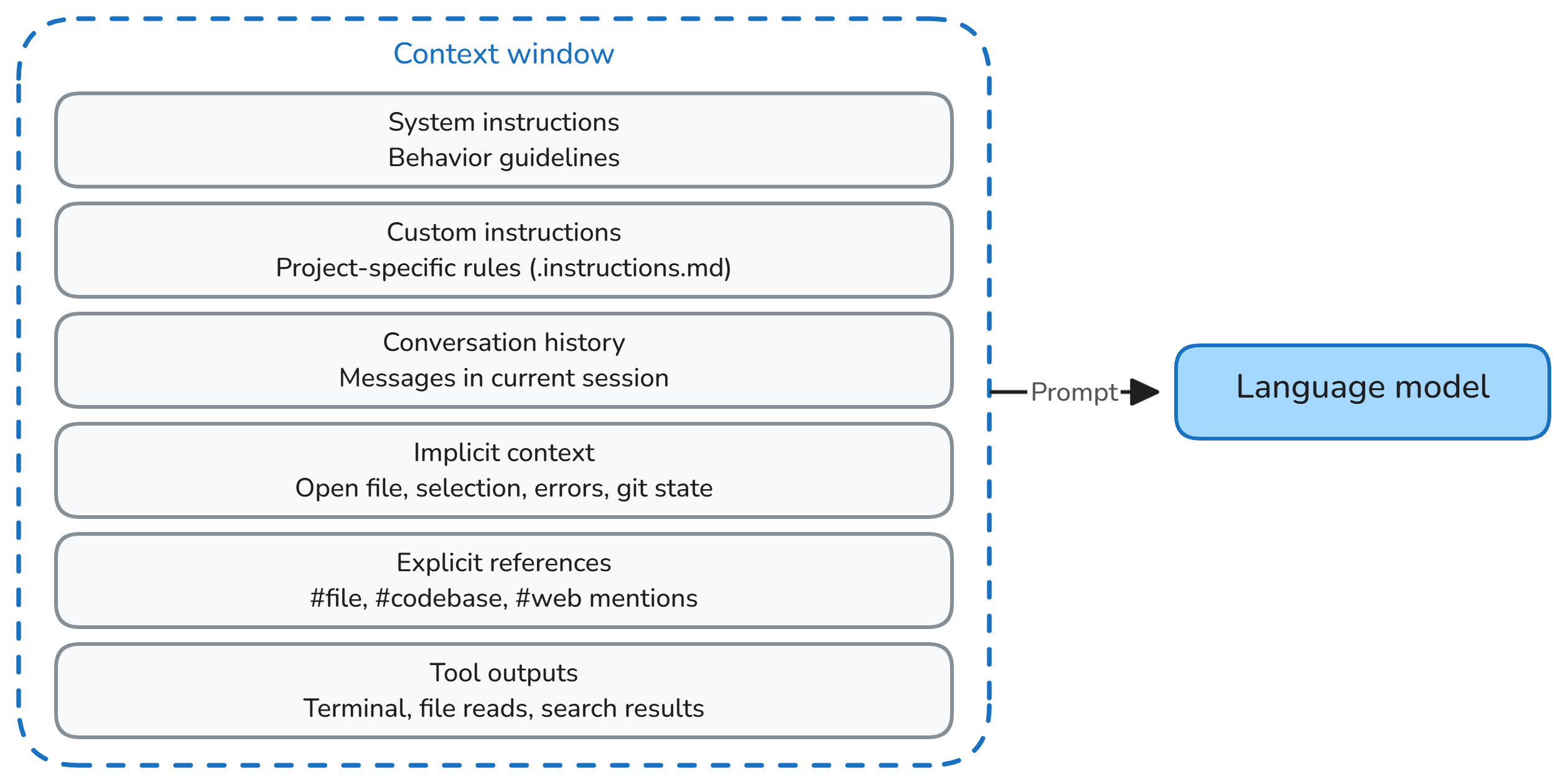
| Page | Question it answers |
|---|---|
| How Copilot usage is charged | What am I actually spending? |
| Measure your usage | Which chats and requests are expensive? |
| Keep context lean | How do I stop paying for irrelevant history? |
| Instructions and tools | What is sent on every request, and can it shrink? |
| Models, planning, delegation | When is a cheaper model or a plan-first flow worth it? |
| Prompt and output style | How do I shorten prompts and cap answers? |
| Language and tokenization | Is writing in my language more expensive? |
| Agent modes and budget guards | Ask vs Plan vs Agent; how do I bound the loop? |
| MCP audit | Which tool servers should stay enabled? |
| Checklist | A one-page routine. |
| cctx: VS Code Token Saver & Accelerator | How do I cut lookup tokens, speed up coding tasks, and see live AIC/USD savings in VS Code? |
| Resources | Tools and repos worth knowing. |
| Papers | Research behind these tactics, ranked by authority. |